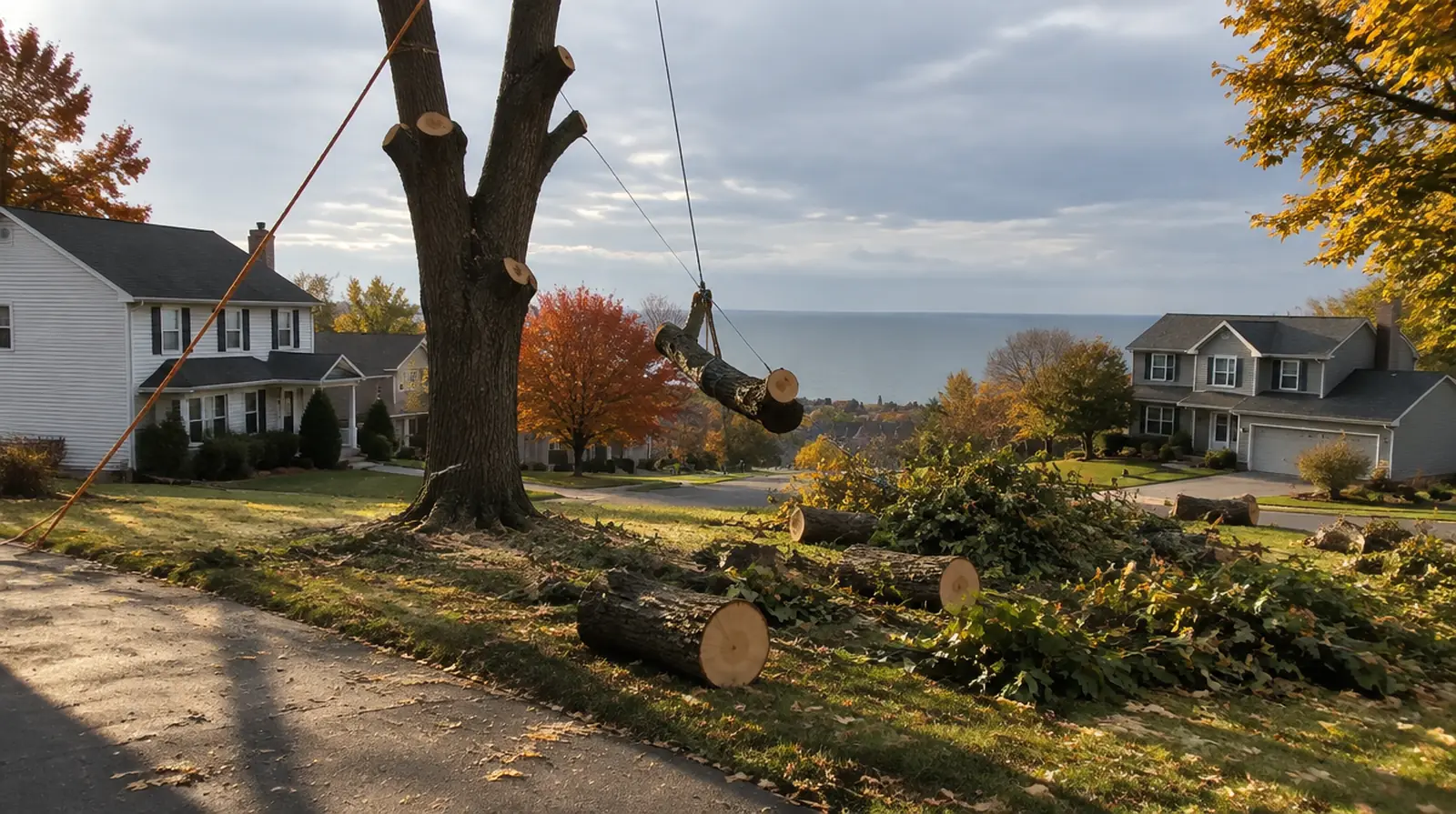
What does tree removal involve?
Tree removal means cutting a tree down to a low stump and hauling it away. On a typical residential lot, a climber or lift operator takes the tree apart from the top down, lowering limbs and trunk sections on ropes. On a tight lot, sectional tree removal keeps every piece under control from the first cut to the last. The brush gets chipped, the wood gets hauled off, and the lawn gets raked clean.
When does a tree need to be removed?
A tree needs to come down when it's dead, badly decayed, or likely to fall on something that matters. Common signs are a dead canopy, a deep trunk crack, fungus at the base, or a lean that got worse after a storm. Trees planted too close to a foundation or driveway also end up here once their roots start doing damage.
Why do trees in Millcreek become hazards?
Most hazard trees in the township trace back to a few causes. Emerald ash borer has killed most untreated ash. Older silver maples rot from old storm wounds. Heavy lake-effect snow cracks weak limbs, and soaked clay soil in spring lets shallow roots pull loose. A tree weakened by one of these usually gets finished off by the next big storm.
What affects the cost of removing a tree?
- Size. Taller trees with wider canopies take more cuts and more hauling.
- Access. A tree behind a fence or garage has to be carried out by hand.
- What's underneath. Roofs, wires, and sheds mean every piece gets roped down.
- Condition. Dead wood is unsafe to climb, so it often needs a lift or crane.
- Stump. Grinding is priced separately if you want it.
Every estimate is free, written, and includes cleanup.
Should you remove the tree or try to save it?
Remove the tree if it's dead, if the trunk is hollow, or if saving it would cost more than it's worth. Keep it if the problem is limited to one area. A tree with a weak fork can often be held together by cabling the weak union, and a tree rubbing the roof may only need a good pruning. We'll tell you honestly which is the better deal.
What do homeowners ask about tree removal?
Do I need a permit to remove a tree in Millcreek?
Trees on your own residential lot usually don't need a permit. Trees in the strip between the sidewalk and the street can fall under township rules. We check before cutting anything that sits near the road.
Can trees be removed in winter?
Yes, and winter is often the best time. Frozen ground holds up equipment without rutting the lawn, and with the leaves gone there's less brush to haul.
How long does a tree removal take?
Most single trees at a home come down and get cleaned up in one day. Very large trees or several trees on a tight lot can take two.
Is the stump removed too?
The stump is cut close to the ground but left in place unless you ask for it to go. Most homeowners add stump grinding afterward so they can mow or replant the spot.
What does a removal day look like on a Millcreek lot?
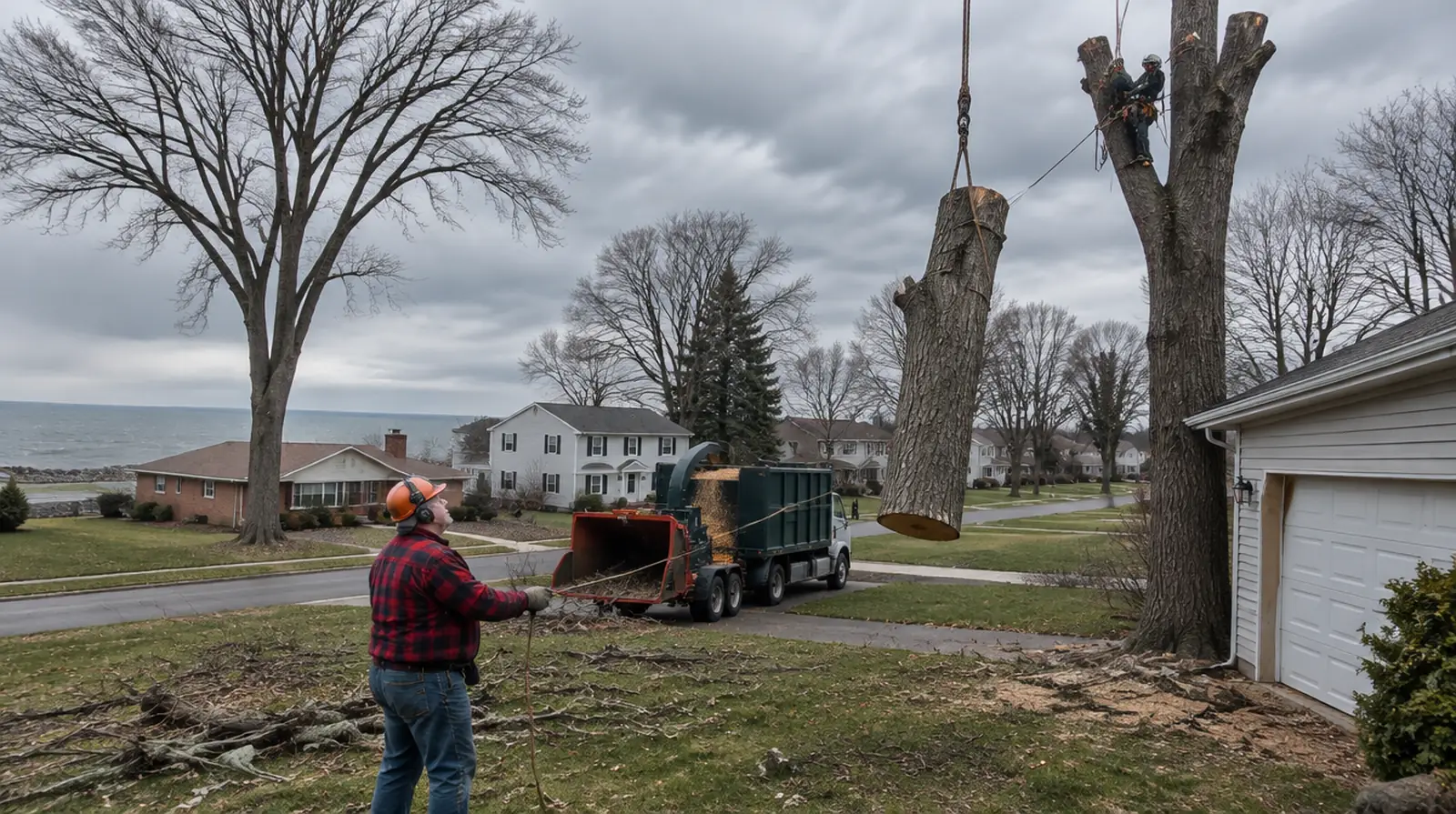
Most yards in the township are flat, which helps, but many have a detached garage, a shed, or a neighbor's fence within a few feet of the trunk. We park the chipper in the driveway, lay mats over soft lawn, and set up a drop zone for wood. A climber or lift operator removes the limbs first, lowering each one on a rope, before taking the trunk down in short sections. Dead ash gets extra caution because the wood snaps instead of bending, so we often work it from a lift rather than climbing.
Once the tree is down, we chip the brush, cut and haul the wood, blow off the driveway and walks, and rake the lawn. If you want firewood left in rounds for a wood stove, tell us before we start.
Is fall or winter a good time for removal?
Often, yes. Without leaves, the climber can see the structure better, and frozen ground holds up our equipment without rutting the clay. The main exception is a tree that is already dangerous, which should come down as soon as possible.
Need a tree taken down?
Call (814) 622-4677 for a free removal estimate.