What does stump grinding involve?
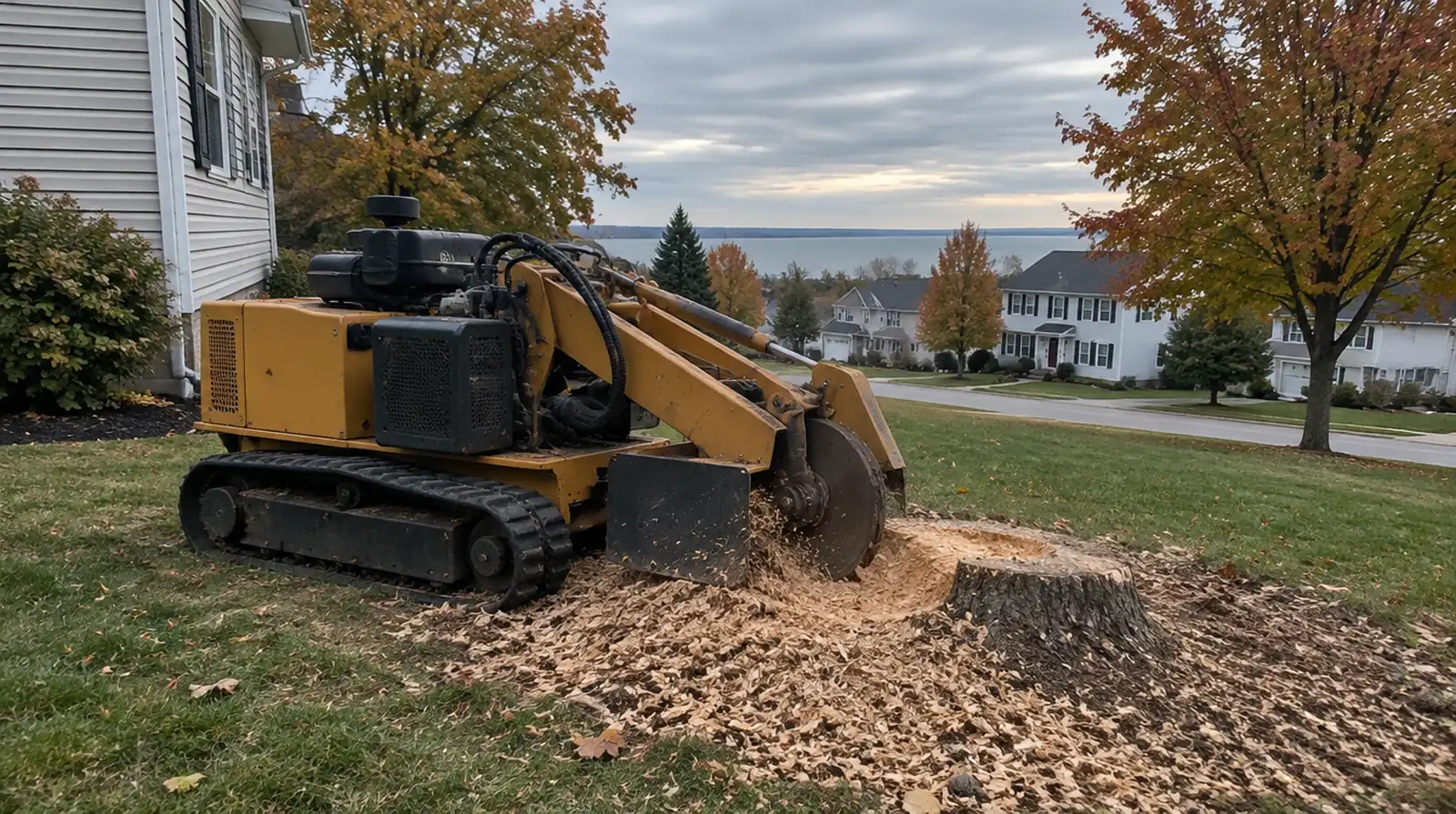
Stump grinding uses a machine with a spinning, toothed wheel to chew a stump into wood chips. We grind 6 to 12 inches below the grass line and take out the surface roots nearby. Before any grinding, we call PA 811 so gas, water, and cable lines get marked.
When should a stump be ground out?
A stump should come out when it's in the way of mowing, a new patio, or a new tree. Grind it sooner if shoots keep sprouting from it, if it's a trip hazard where kids play, or if ants and fungus have moved in.
Why do old stumps cause problems?
Maples, the most common yard trees in Millcreek, often send up new sprouts from the stump and roots for years. In damp clay soil, a rotting stump draws carpenter ants and root fungus that can spread to healthy trees. A stump left after storm-downed trees get cleared can also hide jagged wood right under the grass.
What affects the cost of stump grinding?
- Diameter of the stump, measured at the ground.
- Root flare, since wide surface roots add grinding time.
- How many stumps we grind in one visit.
- Access. Our small grinder fits most backyard gates, but steps and slopes slow it down.
Should you grind the stump or dig it out completely?
Grinding is the right choice for lawns, gardens, and replanting. It's faster and leaves your yard intact. Digging out the whole root ball only makes sense when you're pouring a foundation or footer right where the tree stood. If you're planning a tree removal, adding the grind at the same visit saves a trip.
What do homeowners ask about stump grinding?
What happens to the wood chips?
The chips fill the hole. We can rake them back in, haul them away, or leave a pile for your garden beds.
Can I plant a new tree in the same spot?
You can, but it's better to plant a few feet away. Old roots decay underneath for years, and fresh topsoil in a new spot gives a young tree a cleaner start.
Will the ground sink after grinding?
A little. Chips settle and old roots rot, so plan to add topsoil in the spring and reseed once it levels out.
How does Millcreek's clay soil change stump grinding?
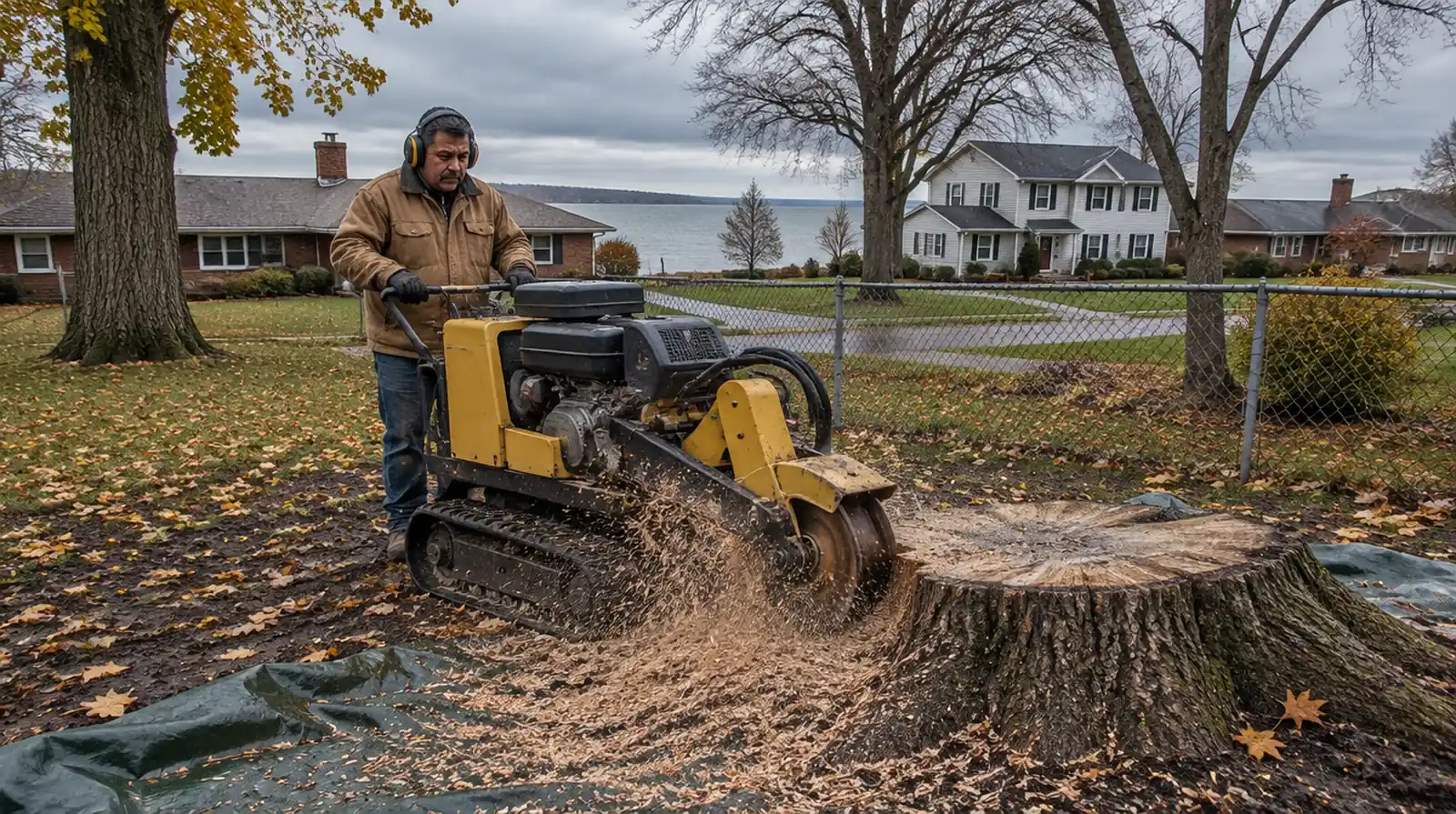
Much of the township sits on dense, poorly drained clay left behind on the old lake plain. In April and early May, and again after a soaking fall rain, that ground turns soft and sticky. A heavy grinder can rut the lawn and leave deep tire marks in the mud, so we lay plywood or ground mats along the path from the driveway to the stump. When the yard is soggy, we sometimes suggest waiting for a drier week in summer or for the ground to firm up in late fall.
Clay also holds water in the hole once the stump is gone. Wood chips left in a low spot soak up rain and break down slowly, which is why a ground-out area can stay spongy. For lawns, we usually recommend pulling most of the chips out, filling with screened topsoil, and crowning it slightly so water runs off instead of pooling.
What about all the old ash stumps?
Emerald ash borer took out a large share of the ash trees in Erie County, and many yards around Millcreek, Fairview, and Summit Township still have the stumps from those removals. Ash stumps don't usually sprout the way maple stumps do, but they rot from the outside in and leave surface roots that catch mower decks and shovels. Grinding the stump and the main roots out toward the drip line clears the way for a new tree, a garden bed, or a level lawn.
What happens on the day of the grind?
We confirm the PA 811 marks, walk the access route with you, and set up a screen if windows, a car, or a neighbor's fence is close. Then we grind the stump and chase any roots you want gone. Before we leave, we rake up the work area and leave the hole filled or cleaned out the way you asked.
Can you grind stumps in winter?
Yes, as long as the ground isn't frozen hard and snow isn't hiding the stump. A firm, lightly frozen lawn can actually hold the machine better than spring mud.
Tired of mowing around a stump?
Call (814) 622-4677 for a free stump grinding estimate.